
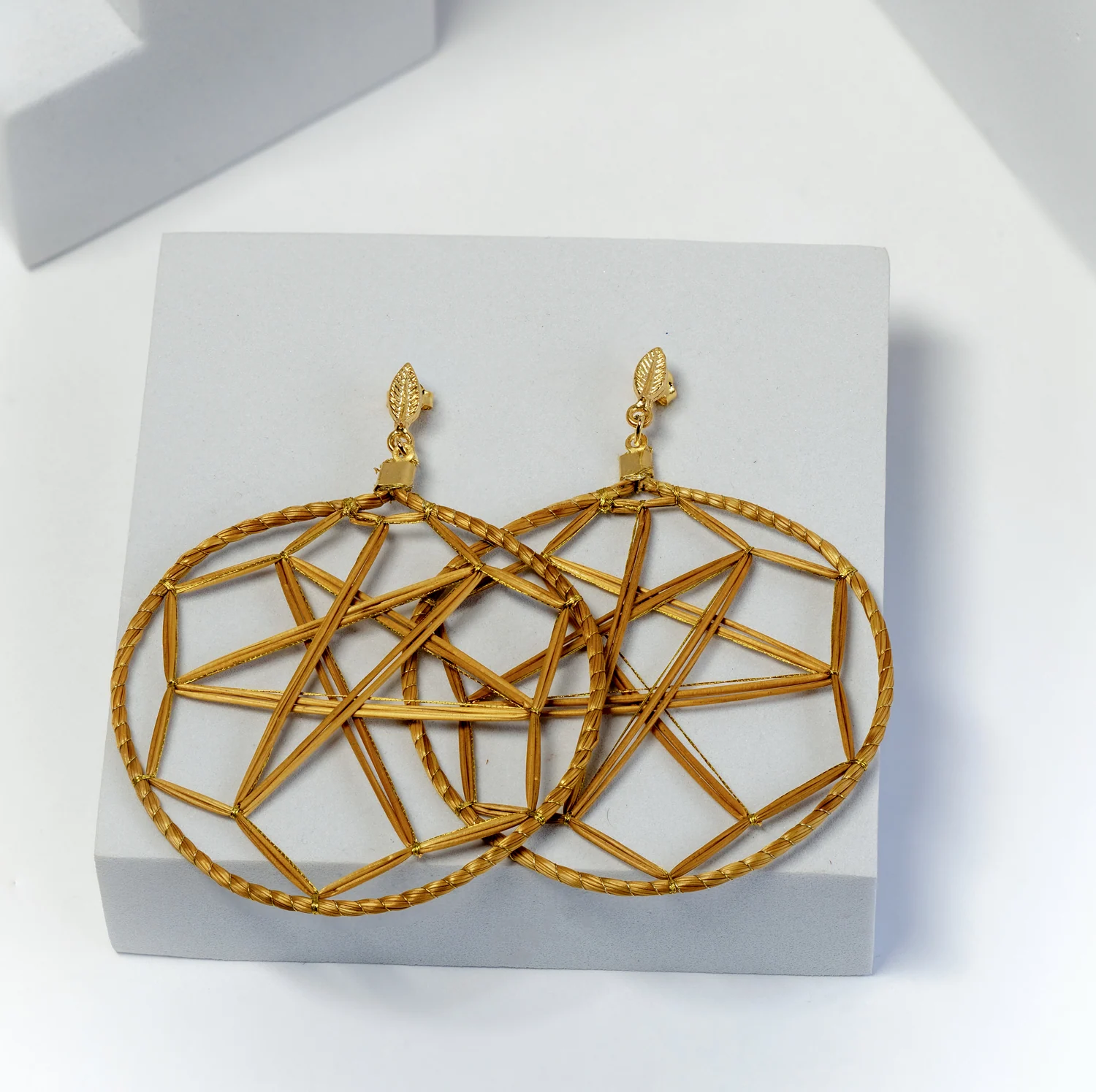
A customer takes home a handcrafted object and later wonders whether to wipe it with water, leave it in a sunny room or polish its fittings. If the only information is a card saying “Handle with love”, the practical question remains unanswered. Good care communication translates confirmed product advice into a few clear actions.
Start with the whole item, not simply its most visible material. A piece may include fibre, thread, adhesive, coating and metal components. Instructions suitable for one part do not automatically suit the assembled object. Ask for product-specific guidance and resolve contradictions before printing a card.
At a glance
- Use confirmed instructions for the complete product.
- Keep important care information available before purchase.
- Identify the item and the version of its care advice.
In this guide
- Collect the instructions before designing the card
- Put the customer’s next action first
- Separate care, safety and brand storytelling
- Make the card work for gifts
- Keep the page, team and printed card aligned
Collect the instructions before designing the card
Request the supplier’s advice on cleaning, handling and storage, plus any relevant limitations on intended use. Keep the original wording in your product record. If you simplify it for customers, preserve the meaning and ask for clarification where a phrase is ambiguous. “Keep dry” and “wipe with a damp cloth” should not appear together without an explanation of what is intended.
Do not invent cleaning mixtures, soaking methods or polishing routines because they appear in a general online guide. The customer is caring for this particular piece. If the supplier cannot confirm a method, leave the method out and ask a specific follow-up question. A gap in product information is a buying task to resolve, not a space for creative copy.
Put the customer’s next action first
Organise the card around practical situations: routine care, storage and what to do if something needs attention. Use short sentences with direct verbs. Explain an unusual term in ordinary language. If an instruction depends on a condition, keep the condition in the same sentence rather than hiding it on the reverse.
A hypothetical card might have three headings, “After use”, “When storing” and “Need help?”. The content beneath them must come from the actual product’s confirmed instructions. This example describes an information structure, not care advice for any Toodobem material or product.
| Card element | Purpose | Common editing problem |
|---|---|---|
| Product or family name | Helps the owner match advice to the item | A generic card used across incompatible products |
| Cleaning instruction | Explains the approved routine | An attractive phrase with no action |
| Storage instruction | Describes the confirmed storage approach | Advice inferred from one component |
| Support route | Gives the customer a place to ask | An unreadable link or obsolete address |
Separate care, safety and brand storytelling
A story about the maker can add meaning, but it should not interrupt essential instructions. Use a clear visual distinction between the care section and the editorial note. If product-specific warnings or other required information apply, preserve them through the appropriate product process; a decorative care card should not be treated as a substitute.
Also avoid turning care advice into a durability promise. “Follow these steps and it will last forever” says more than a cleaning instruction can support. Explain what the customer can do without guaranteeing a particular lifespan, condition or performance. The quality of the guidance comes from its precision.
Make the card work for gifts
The final owner may never see the product page or speak to the sales team. Include a recognisable product name and your shop’s support details so the advice remains useful after the receipt and outer wrapping are separated. Keep wholesale cost information and internal supplier notes out of the customer version.
Print a sample at its actual size and read it in the shop. Ask a colleague to find the cleaning instruction quickly. Check that folds, punches and attachment points do not cover text. If the design works only when enlarged on a screen, simplify it or use a larger format. A little more breathing room is more valuable than squeezing in another paragraph of brand language.
Keep the page, team and printed card aligned
Place relevant care information on the product page before purchase as well as in the package. Give staff the same approved wording. Store the card version with the product record and review it when a material, finish or construction changes. Old printed cards should not be used merely because a stack remains in the drawer.
When choosing an assortment from Toodobem’s catalogue, list any missing care details alongside the product references and ask through the trade contact page. A successful card answers a real question at the moment it arises. It keeps the customer’s attention on enjoying the piece, with a clear route to help when the written instructions are not enough.