
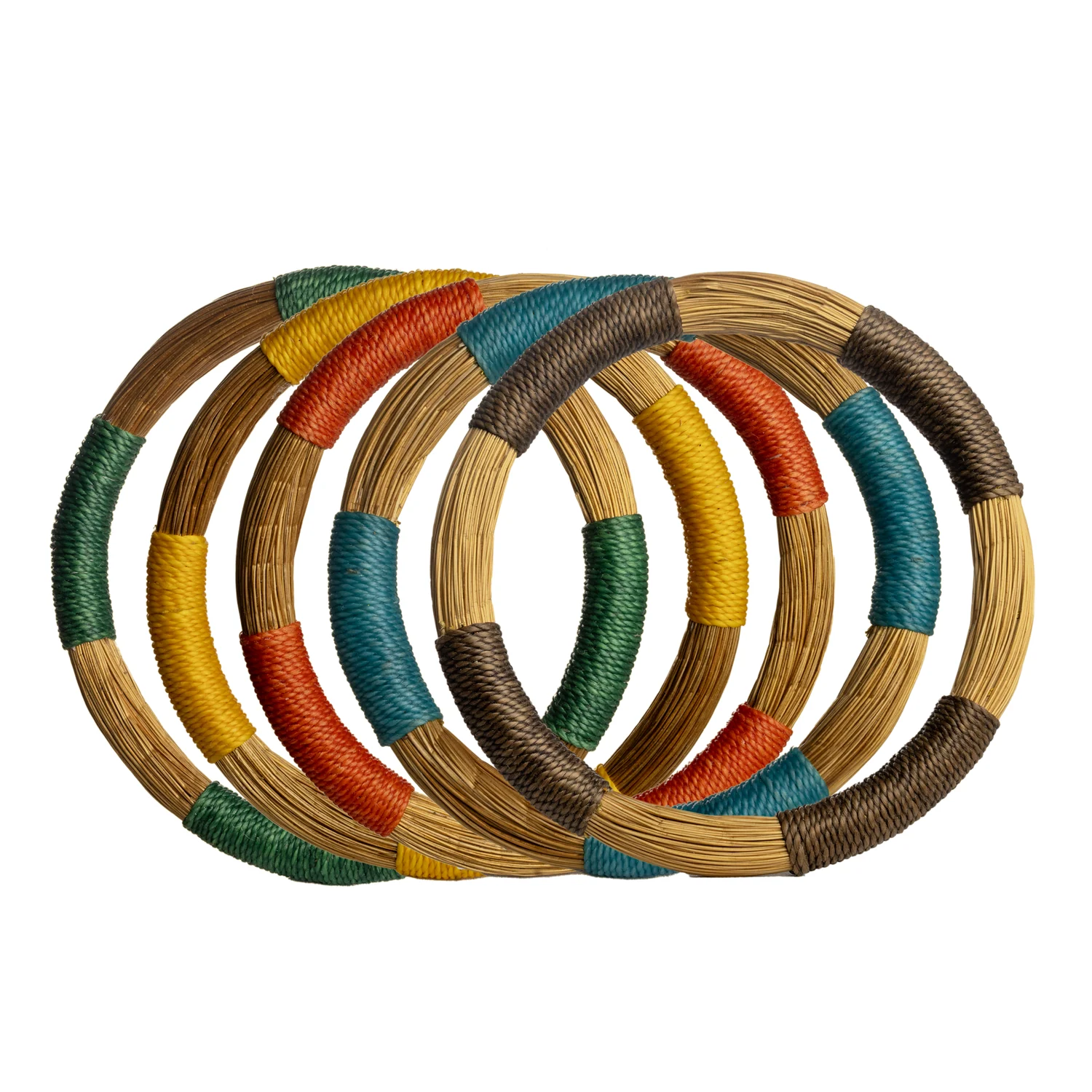
Two earrings look almost identical in a catalogue thumbnail. One has a different fastening, and the other belongs to a smaller size. If both are recorded as “gold earrings”, the ambiguity will appear again at receiving, checkout and reordering. The most useful stock code is the one that consistently points to the exact item the shop intends to sell.
Build that identity before importing products or printing labels. A sensible naming system can remain modest, but it needs to distinguish supplier information from your own records and to survive a new colleague joining the team.
At a glance
- Keep supplier references and internal shop codes in separate fields.
- Record the exact sellable variant and unit of sale.
- Treat a barcode as a data carrier, not a complete product record.
In this guide
- Understand the jobs of the identifiers
- Decide what counts as a separate variant
- A hypothetical identity map
- Protect the connection between code and product
- Give uncertain stock a holding process
Understand the jobs of the identifiers
Use your shop’s SKU as an internal identifier for a sellable stock record. Keep the supplier’s product reference in a separate field so it can be used accurately in orders and enquiries. These identifiers may look similar, but they belong to different working systems and should not be assumed to be interchangeable.
GS1 explains that a GTIN identifies a product and can be represented in a scannable barcode. A barcode does not itself contain your complete product description, care instructions or shop inventory history.
If a supplier provides a GTIN, store it accurately and confirm which variant and packaging level it identifies. Do not create a plausible-looking number and label it a GTIN. If your retail system needs a different internal scanning code, keep that purpose explicit and follow the system’s documented setup.
Decide what counts as a separate variant
Ask whether a customer can deliberately choose between the options and whether the shop needs to count or reorder them separately. A different size, fastening or specified colour may require its own sellable record. A documented small variation within an item may belong in its description instead. The decision should follow the real selling and replenishment process.
Do not split every handmade difference into a new variant merely because two pieces are not visually identical. Equally, do not hide a meaningful choice beneath one broad name. Write down the rule and apply it consistently across the assortment, revisiting it if the supplier’s references or product definition change.
A hypothetical identity map
| Field | Illustrative entry | Purpose |
|---|---|---|
| Shop SKU | JWL-014-S | Internal stock identity |
| Supplier reference | Supplier’s confirmed reference | Ordering and supplier communication |
| Variant | Small, specified finish | Customer selection and counting |
| Unit of sale | One pair | Meaning of the quantity |
| GTIN | Only the verified supplied identifier, if applicable | Standard product identification |
This table illustrates a record structure, not an actual Toodobem product code. Notice that the internal SKU need not explain every property. Trying to encode material, season, supplier, colour and price into a long code can make it harder to maintain when those details change. Store descriptive properties in their own fields.
Protect the connection between code and product
Once a code has been used in sales or stock history, avoid casually reusing it for a different product. Keep discontinued records identifiable so earlier transactions can still be understood. If you rename an item for clearer customer copy, preserve the underlying link to its history and supplier reference.
Before printing a batch of labels, check a sample against the physical item and the receiving sheet. Scan it if scanning is part of your workflow. Confirm that the correct variant, unit and retail information appear. A label that scans successfully can still be attached to the wrong object.
Check exported files before moving records between systems. A spreadsheet may display a long identifier differently from its original text. Compare the imported value with the source and retain any leading zeroes where they belong. The practical check is simple: can the destination record still be matched unambiguously to the label and supplier documentation?
Give uncertain stock a holding process
If a delivery contains an item you cannot identify, keep it out of sellable inventory until the reference is resolved. Compare dimensions, construction and supplied documentation, then ask a precise question. Do not force it into the closest-looking record to finish the intake quickly.
When selecting from Toodobem’s collections, capture the references alongside your buying notes. Resolve identity questions through the trade contact page before they spread into labels or product pages.
A reliable identity system is visible in ordinary work: the buyer can request the right item, the colleague can count it correctly and the customer receives the variant they chose. That agreement matters more than making the stock codes look sophisticated.