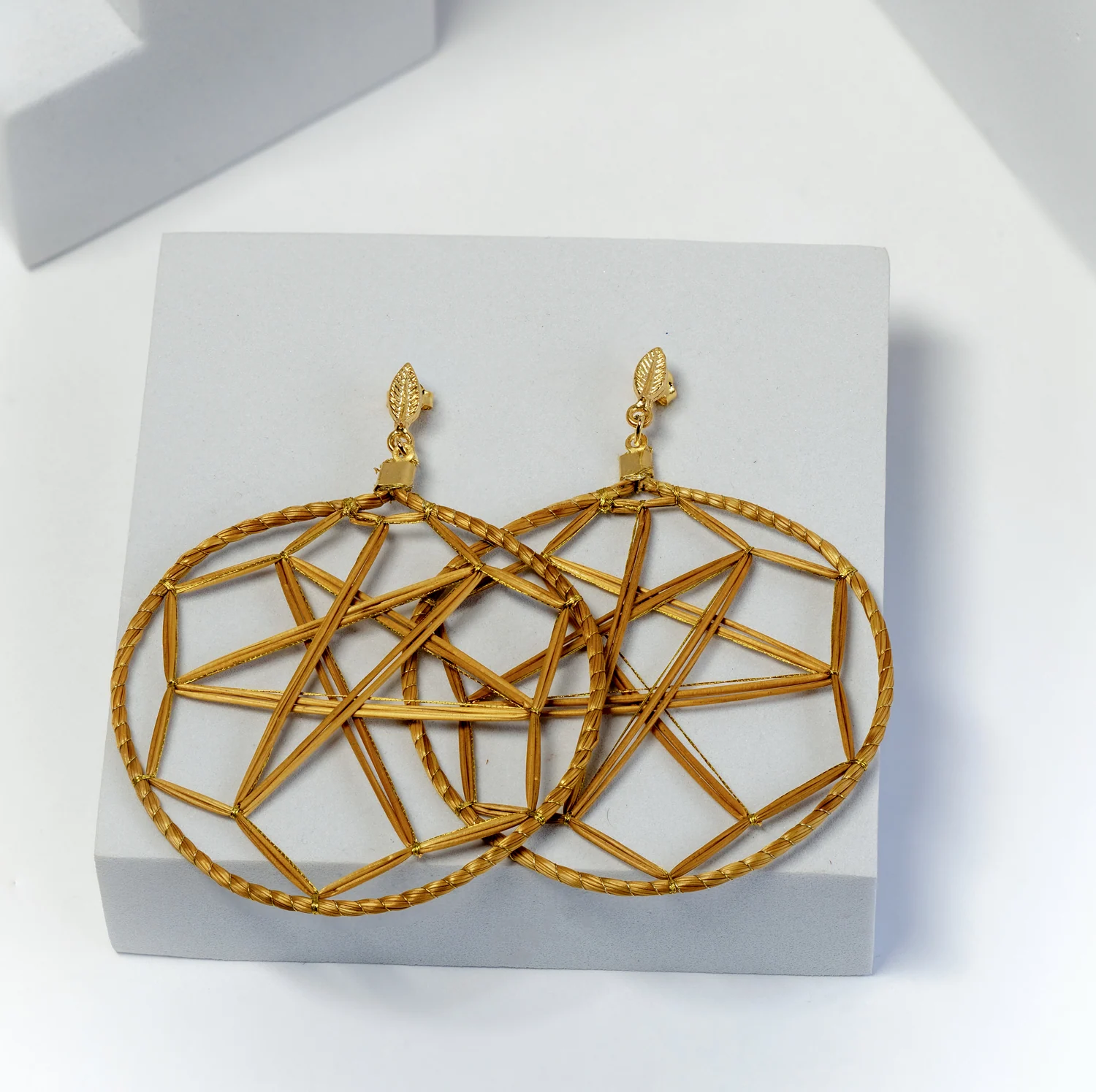
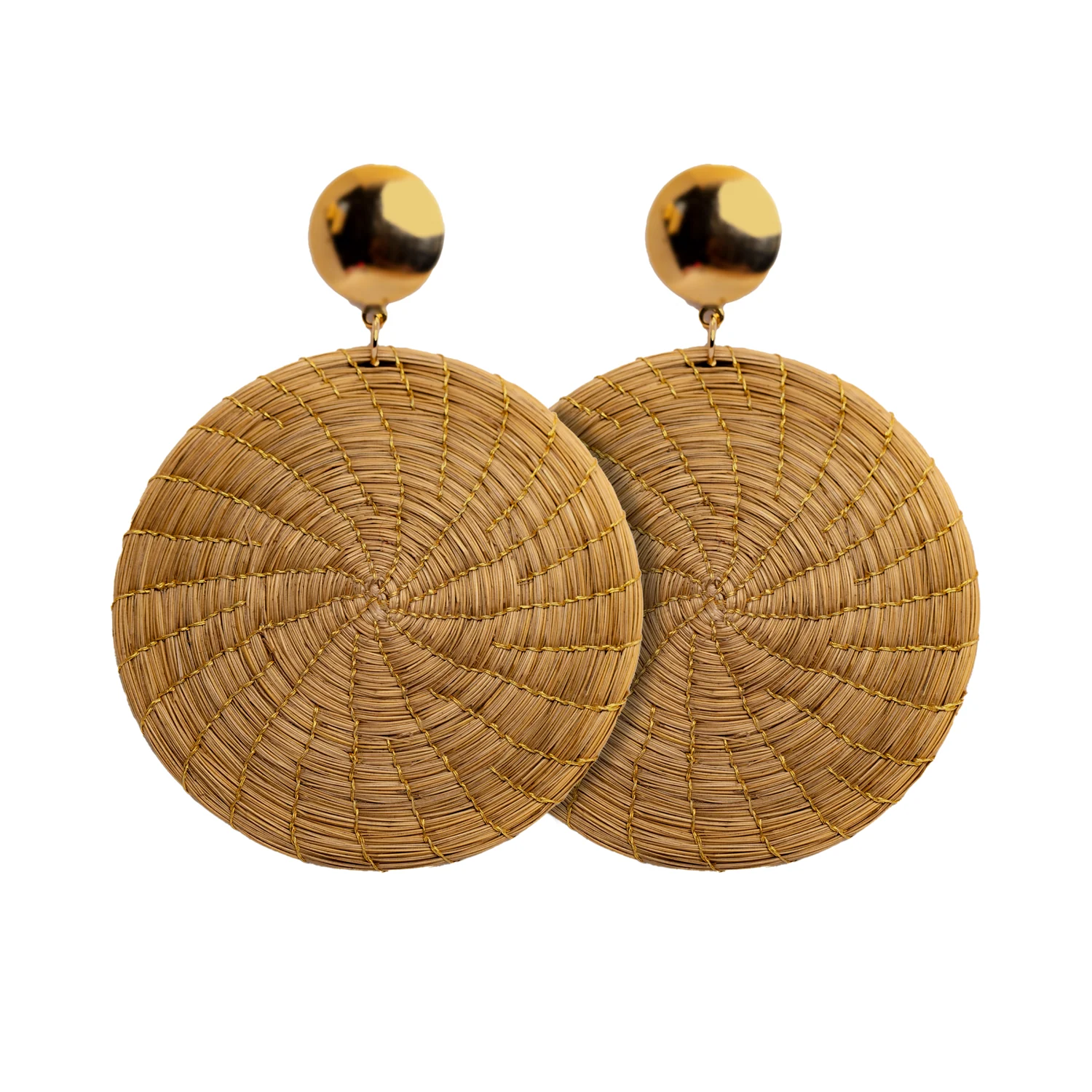
“Lightweight statement earrings” sounds helpful until a customer asks how long they are and what lightweight means. Personal preferences differ, and a dramatic photograph does not establish how a piece will sit when worn. Clear measurements give the customer a practical starting point for their own judgement.
Build the product record around the complete earring. The decorative element, connecting parts and fastening all contribute to the object the customer receives. Measure and describe them consistently, and make clear whether a figure comes from supplier information or a check of the specific stock in your shop.
At a glance
- State exactly where each measurement starts and ends.
- Distinguish one earring’s weight from the pair’s weight.
- Use composition facts without universal comfort or allergy promises.
In this guide
- Separate total drop from decorative size
- Give weight a clear unit and scope
- A hypothetical product record
- Photograph the questions measurements cannot answer alone
- Describe fittings with evidence
- Keep the comparison consistent across the collection
Separate total drop from decorative size
Total drop should describe a clearly stated top-to-bottom measurement of the complete piece. Decorative length describes the ornament itself. These can be different, particularly when a hook or connecting element sits above the ornament. Do not use the shorter number as the headline size without explaining what it excludes.
Record maximum width and any relevant depth using the same units throughout the collection. If the piece moves or can rest in different positions, explain the measurement approach. Use appropriate precision for the object and the information available. An approximate handmade dimension should not be presented as an exact manufacturing tolerance.
Give weight a clear unit and scope
If weight is useful to the customer, state whether it refers to one earring or the pair. Keep packaging weight separate. A supplier’s packed-shipment figure is not an earring wearability measurement. If weighing stock yourself, use a suitable scale and record how the measurement was taken rather than implying laboratory testing.
Do not convert a number into a universal comfort claim. Customers have different preferences and requirements, and a weight figure alone does not settle how a particular design will feel to every wearer. Provide the measurement and relevant construction details, then allow the customer to compare with earrings they already know.
A hypothetical product record
| Measurement or detail | Illustrative entry | What it clarifies |
|---|---|---|
| Total drop | Approximately 6 cm, top of hook to lowest point | The overall hanging length |
| Decorative element | Approximately 3.5 cm long | The size of the ornament itself |
| Maximum width | Approximately 2.8 cm | The visible spread |
| Weight | 4 g per earring, excluding packaging | The scope of the stated figure |
| Fastening | The confirmed fastening description | How the customer attaches the piece |
All dimensions and weights in this table are hypothetical. They are not specifications for a Toodobem product and do not establish a threshold for comfort. The example shows how a customer can distinguish several useful facts that are often collapsed into one vague description.
Photograph the questions measurements cannot answer alone
Include a whole-piece image, a side or reverse view where relevant and a contextual image that shows the overall proportion. Keep the photographed variant consistent with the product record. If several sizes are offered, a comparison image should identify each clearly rather than relying on perspective.
A worn photograph can help explain scale, but it is one visual example. Avoid implying that the piece will sit identically on every person. Keep the written measurements visible so customers can assess the image in context and compare it with their own preferences.
Describe fittings with evidence
Record the confirmed materials and construction of posts, hooks, clips or other fittings. Do not infer composition from a silver or gold appearance. If the supplier has not provided a component detail, ask for it and keep the uncertainty visible in the internal record until it is resolved.
Avoid unsupported terms such as allergy-safe or suitable for every sensitive ear. When a customer has a particular material requirement, provide the exact confirmed information rather than a general reassurance. The retail task is to make the relevant facts available, not to make a medical judgement on the customer’s behalf.
Keep the comparison consistent across the collection
Use the same field order on each product page and staff sheet. Check that “length” means the same thing across variants, or label the difference clearly. Review the information when a new batch, fastening or design revision arrives so earlier measurements do not persist unnoticed.
When browsing Toodobem’s jewellery selection in the catalogue, note which measurements you need and request any missing details. Good wearability information gives customers a clear comparison, with enough precision to support a choice and enough honesty to leave that choice in their hands.