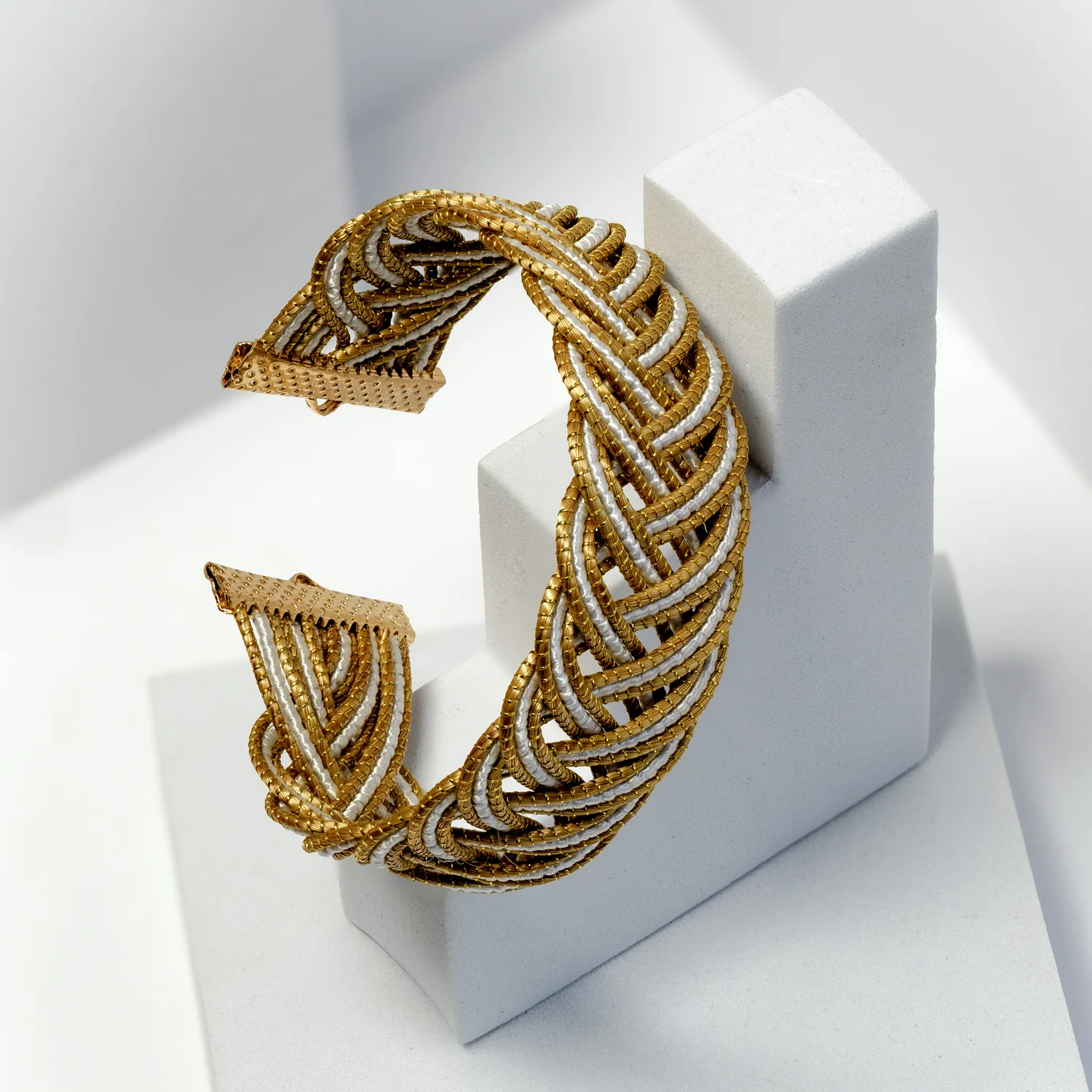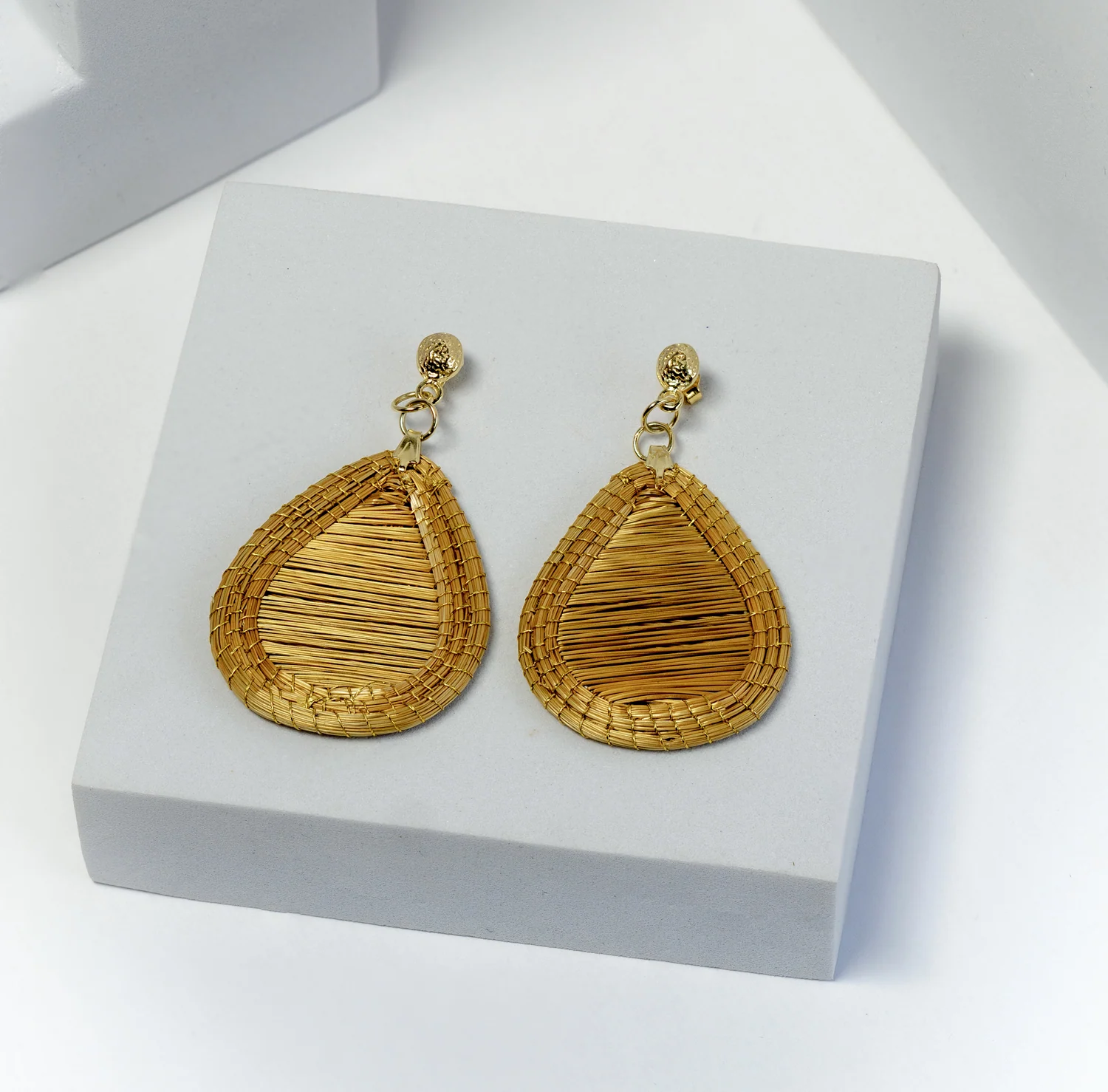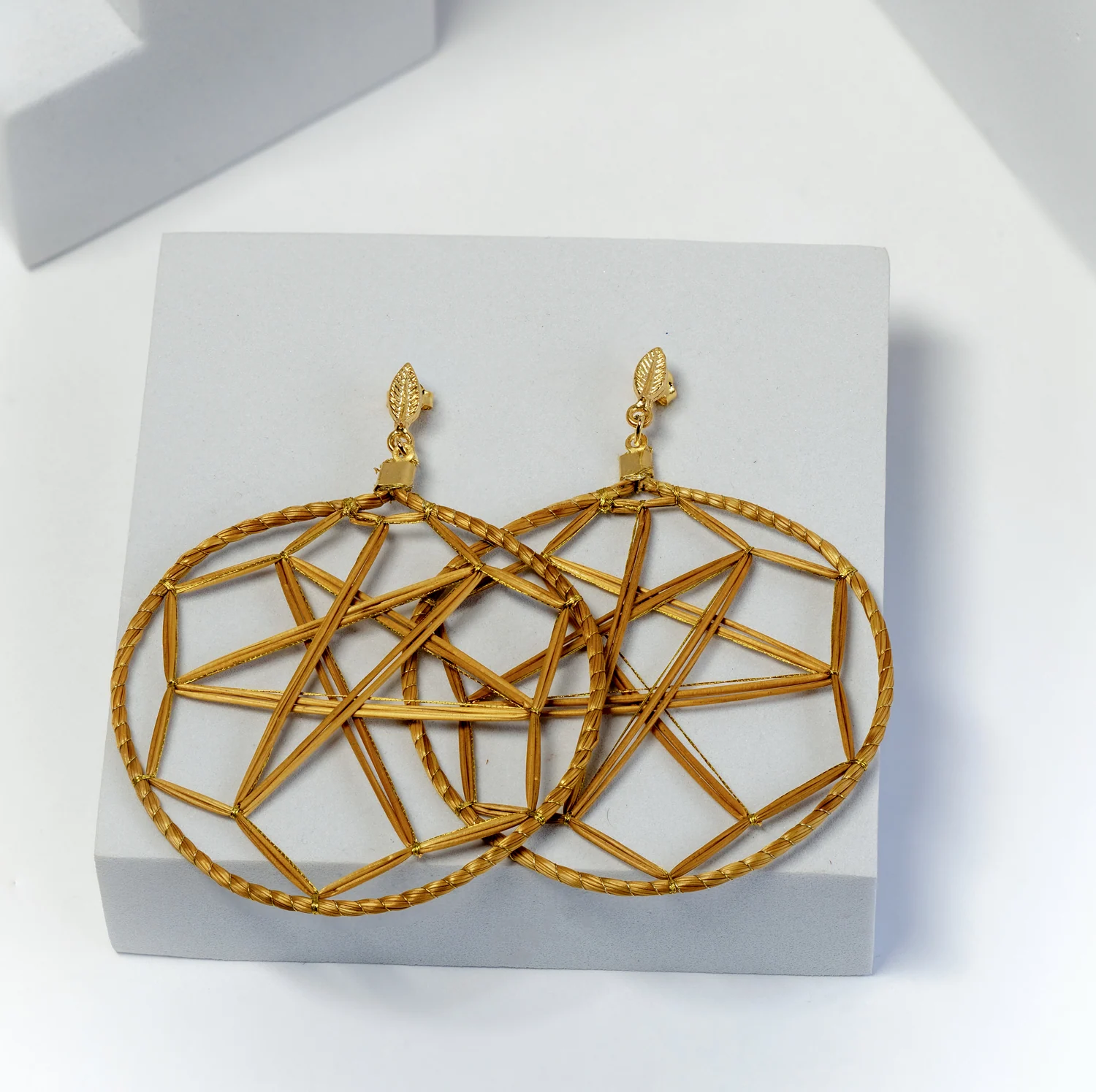
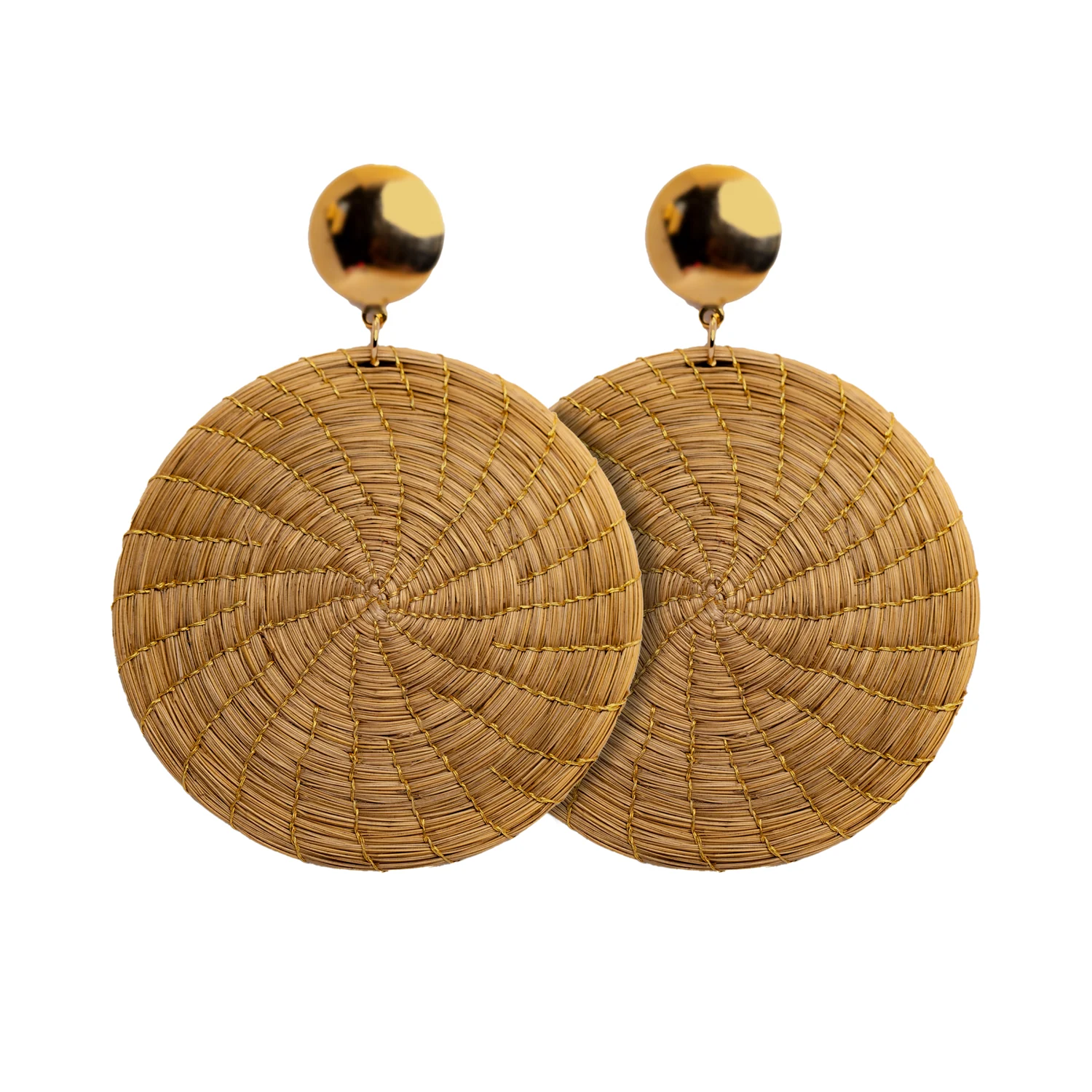
The words “golden grass” create an immediate picture, but they leave a buyer with several practical questions. Is the colour a description of the plant material or a finish? What holds the structure together? Are the metal components identified separately? Answering these questions turns an unfamiliar material into something a boutique can select with confidence.
At a glance
- Golden grass names a plant material, not a precious metal.
- Assess the finished piece, including bindings and fittings.
- Keep botanical background separate from product provenance.
In this guide
- What the name identifies
- Ask what you are actually buying
- Examine a sample without making a promise for it
- Four distinctions worth keeping in the buying file
- Choose a retail role for the texture
- Handle care as a product question
What the name identifies
In research published in Acta Botanica Brasilica, capim dourado is identified as Syngonanthus nitens, a member of Eriocaulaceae. Its flowering stalks are used in craftwork. The research describes those stalks as golden and associates their craft use with Jalapão.
That establishes the basic vocabulary. It does not mean every object described as golden grass has the same construction, comes from the same maker or carries the same finish. Nor does the word “golden” identify the composition of a hook or clasp. Treat the plant body and every added component as separate entries in your buying notes.
Ask what you are actually buying
Start with a reference-level description. The supplier should be able to connect the material name to the item code, not merely to a general collection page. For jewellery, ask about the principal body, binding, attachment ring, fastening and any decorative additions. For an object intended for the home, include the base, internal supports and surface treatments where relevant.
These details help you compare items that look similar in a small image. A tightly organised circular form and a looser open structure may create very different impressions on a shelf. Neither is automatically preferable. What matters is whether the construction, scale and intended use match your shop’s offer.
Examine a sample without making a promise for it
Observe the direction of the stalks, the consistency of the joins and the point where flexible and rigid parts meet. Measure the finished object rather than inferring dimensions from a photograph. For an earring, ask whether the stated weight refers to one earring or a complete pair. For a decorative piece, establish whether dimensions include protruding elements.
Do not convert a sample observation into a universal performance claim. A piece that feels light in your hand has not been demonstrated comfortable for every wearer. A surface that looks untreated has not been proven free of finishes. Your observation is valuable when recorded honestly and kept within its limits.
Four distinctions worth keeping in the buying file
| Information | What it tells you | What remains to confirm |
|---|---|---|
| Golden grass material name | The stated principal plant material | Added materials and treatments |
| Golden appearance | A visible colour characteristic | The composition of metal fittings |
| Handmade construction | The stated making process | The agreed range of variation |
| Regional craft background | Context for the material | The provenance of this product |
Choose a retail role for the texture
One option is to use golden grass as a visual bridge between quiet clothing and more expressive accessories. Another is to make its fine linear surface the focus of a small homeware display. Choose the role before selecting every available shape. Repetition can make a material legible; too many unrelated silhouettes can make the introduction harder to understand.
For a hypothetical first selection, consider one compact form, one elongated form and one larger focal piece within a shared colour family. This is a way to compare customer responses to scale while keeping the material constant. It is not a recommended quantity or an assertion about what Toodobem currently stocks.
Handle care as a product question
Ask for care guidance that covers the complete object. A cleaning method appropriate to a metal fitting may be unsuitable for the plant body or its binding. Avoid introducing oils, polishes or water-based treatments simply because an internet tip describes them as natural. The useful instruction is the one that applies to the actual construction.
Decide where the stock will wait before it reaches the display and how staff can retrieve it without catching projecting parts. Care belongs in the buying decision because a range that needs protection must have suitable space from the start.
When reviewing the Toodobem catalogue, use golden grass as a precise material question rather than a complete product description. Confirm composition, construction, dimensions and intended use for each shortlisted reference. Those answers let the beauty of the surface lead the presentation while keeping the information beneath it dependable.