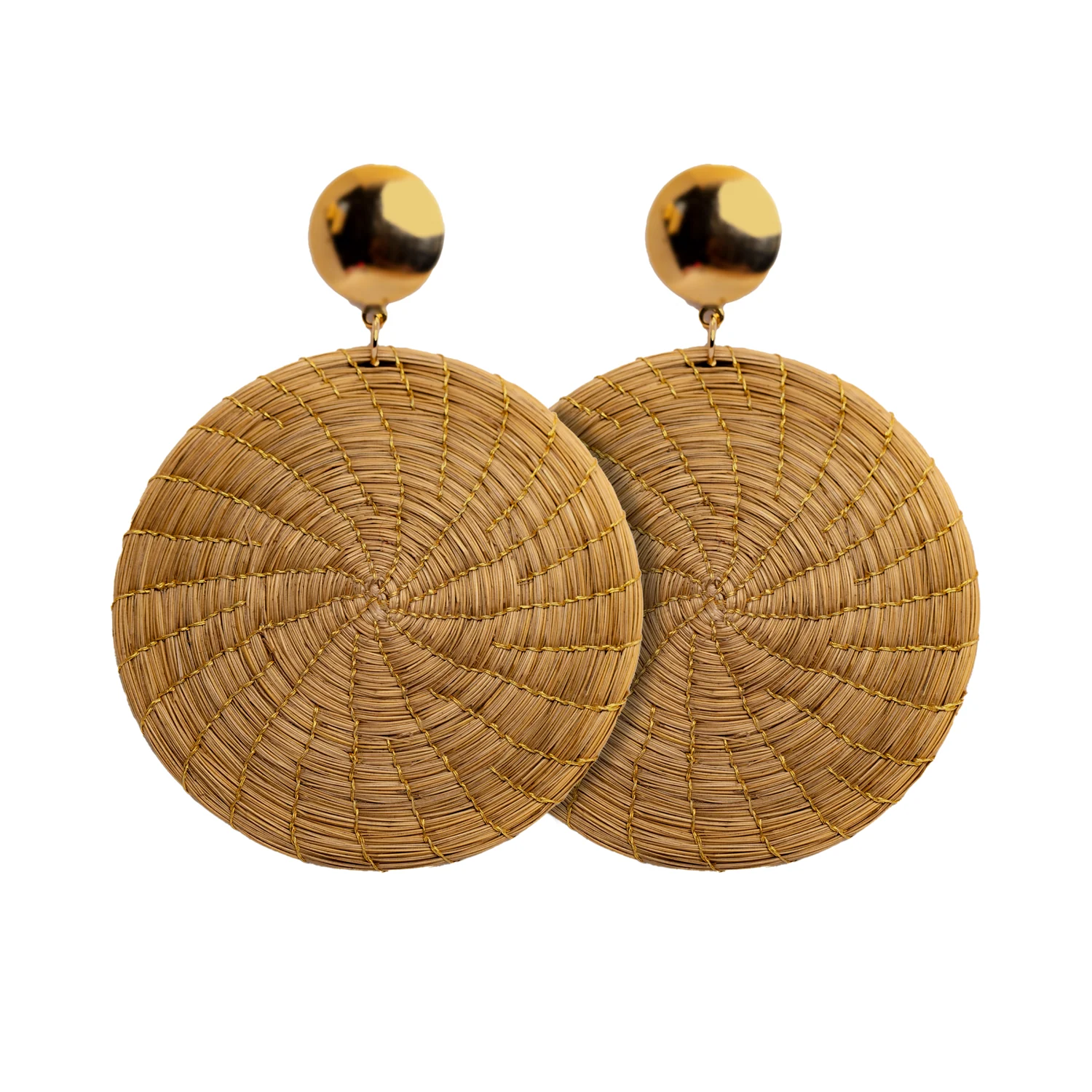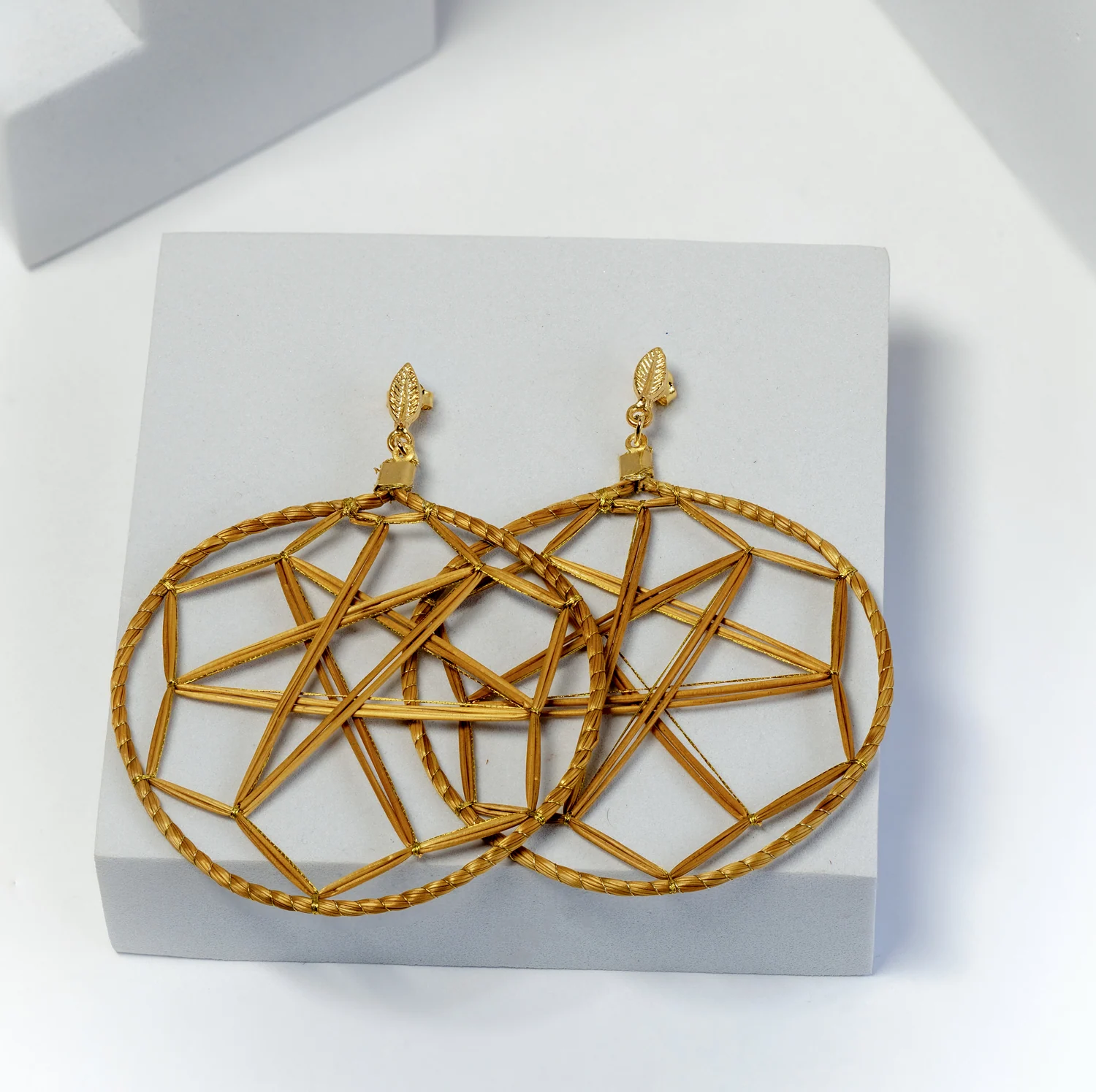
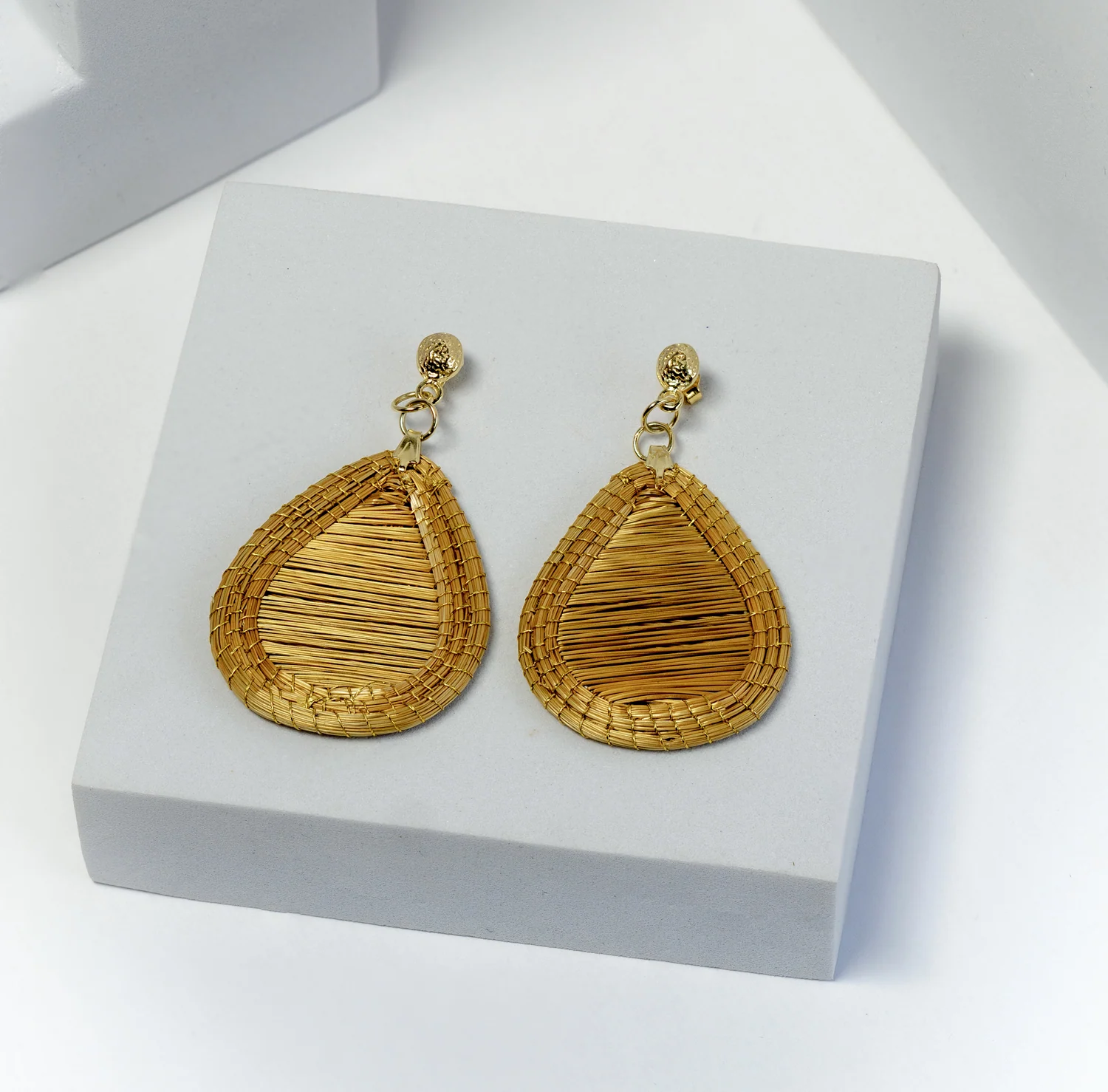
A buyer sees a golden circle on a supplier’s page. The title says “gold earrings”, while the details mention a plant fibre. It might be an innocent shorthand, but it leaves the retailer with an unanswered question: what, exactly, is made of what? The solution begins before any customer-facing description is written, by making the buying vocabulary precise.
Colour and composition serve different purposes. Colour helps a customer imagine the piece with clothing or other accessories. Composition explains its materials. Keeping these ideas distinct does not make a description less attractive. It allows the visual quality to remain appealing without asking a colour word to carry an unsupported material claim.
At a glance
- Use colour words for appearance and material names for composition.
- Describe each component instead of extending one claim to the whole piece.
- Resolve ambiguous supplier wording before placing the order.
In this guide
- Divide the object into named components
- Choose words that answer one question at a time
- A description can be expressive and exact
- Do not let nearby language expand a claim
- Use a three-question review
Divide the object into named components
Take a piece of jewellery and list its visible parts: main body, connecting rings, fastening, thread, bead or other addition. For each part, record the stated material separately from its appearance. If the composition of a fitting is unconfirmed, leave the material question open in your purchasing notes rather than filling it with the name of a similar-looking metal.
Golden grass illustrates why this matters. Botanical research on capim dourado describes craft made with the flowering stalks of Syngonanthus nitens. A plant material with a golden appearance tells you nothing about the metal used in an attached fastening.
Choose words that answer one question at a time
| Wording | Reader’s likely question | Better buying clarification |
|---|---|---|
| Gold earrings | Is gold the material of the object? | Identify the body and fittings separately |
| Golden grass earrings | What are the remaining components? | Add the confirmed fastening description |
| Gold-coloured fitting | What is the underlying material? | Request its composition and finish |
| Natural finish | Does this mean undyed, uncoated or simply textured? | Ask which treatment is present or absent |
The table is an editorial decision aid, not a complete labelling rule. Its purpose is to expose uncertainty while it is still easy to ask the supplier. Where a specific market requires particular terminology or documentation, obtain the relevant specialist advice for that product and destination.
A description can be expressive and exact
Consider this hypothetical wording for a fully documented item: “Circular golden grass earrings with a warm golden tone and a fine linear surface.” The sentence describes shape, the stated body material and appearance. A second sentence can give the separately verified fastening material, measurements and weight. There is no need to put every detail into the opening phrase.
Now consider “luxury pure gold natural earrings”. The terms compete with one another and the reader cannot tell which one applies to the plant body, the finish or the hardware. Instead of replacing one adjective, rebuild the sentence around the actual components. Precision is a structural choice before it is a stylistic one.
Do not let nearby language expand a claim
A collection heading can accidentally affect every item beneath it. If a display is called “Golden Grass”, check whether every product shown contains the stated material. If only some references qualify, use a wider visual theme for the display and identify materials at product level. The heading should help customers navigate, not blur differences.
The same discipline applies when comparing a new reference with a previous order. A visually similar replacement fastening is not evidence of identical composition. Ask the supplier to confirm whether the specification has changed. Update the buying record before the replacement inherits wording written for the earlier version.
Use a three-question review
- What can I see? Record colour, silhouette and visible surface characteristics without guessing their cause.
- What has been confirmed? Connect material and finish statements to information about the actual item.
- What might a customer infer? Read the headline alone, then the description, to check whether either suggests more than the evidence supports.
Ask another member of the buying team to repeat the material description back in their own words. If they believe the entire earring is made of a precious metal when that is not established, the wording needs work even if every individual phrase seems defensible.
Use the Toodobem contact page to resolve composition questions attached to a shortlist. The aim is a complete, clear answer for each reference: this is the body material, this is the fastening, and this is how the object looks. Golden colour can then remain a strong visual attraction without becoming an accidental promise.