A product has barely moved, and the immediate temptation is to reduce its price. That may be a sensible eventual decision, but first ask what the low sales figure actually demonstrates. A piece hidden behind a larger object, a reference without clear dimensions and a genuinely mismatched style can all produce the same number on a sales report.
Diagnosing slow stock means separating these possibilities. The aim is not to defend every buying choice. It is to learn which assumption failed and choose a proportionate next action.
At a glance
- Check selling opportunity before judging customer demand.
- Change one relevant factor so the result remains interpretable.
- Use the diagnosis to improve the next buying decision.
In this guide
- Confirm the product had a selling opportunity
- Return to the buying hypothesis
- Use a diagnostic sequence
- Change one meaningful factor
- Distinguish interest from a buying barrier
- Set an end to the investigation
Confirm the product had a selling opportunity
Check when the reference became available and how long it was actually on display. Was it waiting for information, stored away during a layout change or temporarily unavailable despite appearing in the stock count? A calendar month is not automatically a month of meaningful exposure.
Look at the route a customer takes through the shop. Can the piece be seen at the point where its intended customer is browsing? Does another object hide its outline? Is its price attached clearly enough to connect with the correct item? These observations can reveal a practical barrier before you conclude the product itself is wrong.
Return to the buying hypothesis
Write down why the item was selected. Perhaps it was intended as a compact gift, a larger alternative to a successful design or a visual link between two categories. Compare that role with how it is currently presented. A product bought for one purpose and displayed for another has not received a clean test of the original idea.
If the original reason was simply personal attraction, create a more specific hypothesis now. Identify the customer, occasion and comparison set. This will help you decide whether a focused trial is worthwhile or whether the piece has no convincing role in the shop.
Use a diagnostic sequence
| Possible issue | Evidence to look for | Focused response |
|---|---|---|
| Low visibility | The outline is obscured or the location is rarely browsed | Move it to a relevant, readable position |
| Unclear use or scale | Customers repeatedly ask the same basic question | Clarify that specific point |
| Weak assortment fit | No clear relationship to nearby products or customer needs | Test a more suitable grouping |
| Price resistance | Interest is followed by consistent, specific price objections | Review value explanation and price economics |
| Limited customer relevance | Little interest after a fair, clear presentation | Consider reducing future commitment |
Change one meaningful factor
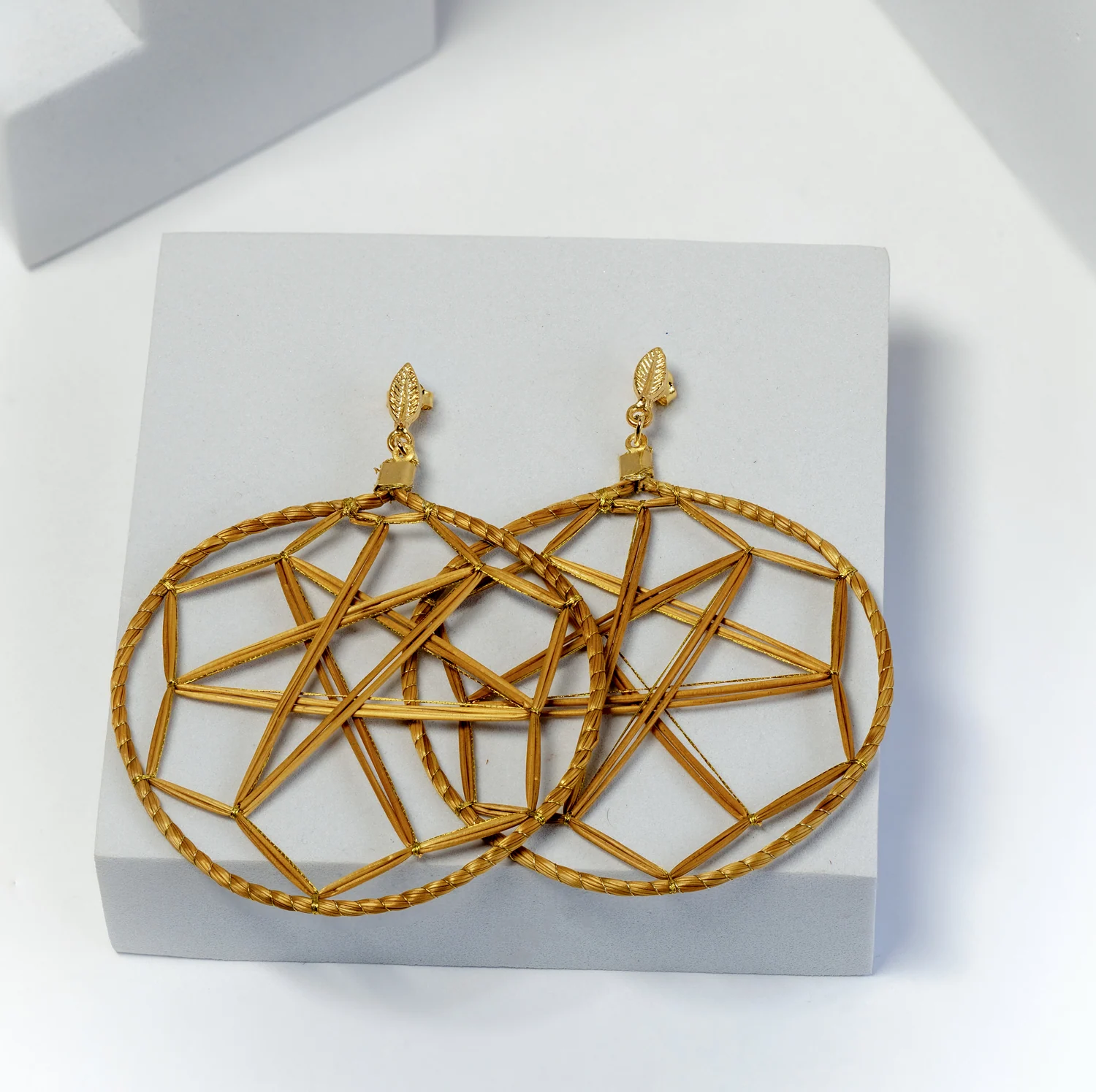
In a hypothetical boutique, a larger earring shape sits low in a crowded tray. The buyer moves it to a stand where its outline is visible, while keeping the price and accompanying information unchanged. A short review can now ask whether improved visibility altered the response.
If the buyer simultaneously changes the price, location, packaging and display story, an improvement becomes harder to interpret. Several changes may be necessary in practice, but record them honestly and avoid claiming that one factor caused the outcome.
Distinguish interest from a buying barrier
Notice the stage at which customers hesitate. Do they pass the product without looking, examine it and leave, or ask a specific question before choosing something else? These observations are clues, not proof. Use them to decide which question deserves a closer look.
Do not turn one comment into a broad market conclusion. A single customer may dislike the scale while another seeks exactly that quality. Look for repeated patterns and compare them with the number of genuine opportunities the product has had.
Set an end to the investigation
Choose a review date and an action before starting the focused change. The decision might be to keep a small quantity, reposition the role, make a measured price adjustment or stop reordering. Avoid an endless sequence of minor changes that leaves the stock and the buying assumption unresolved.
If a price change is considered, calculate the resulting gross profit using the actual cost basis. Moving units is not the only objective. The action should make sense for the remaining stock and the wider collection.
When returning to the Toodobem collections for the next selection, carry forward the specific lesson. “Larger forms need a clearer display” is more useful than “this material does not sell”. A good diagnosis narrows the problem enough to improve the next order.