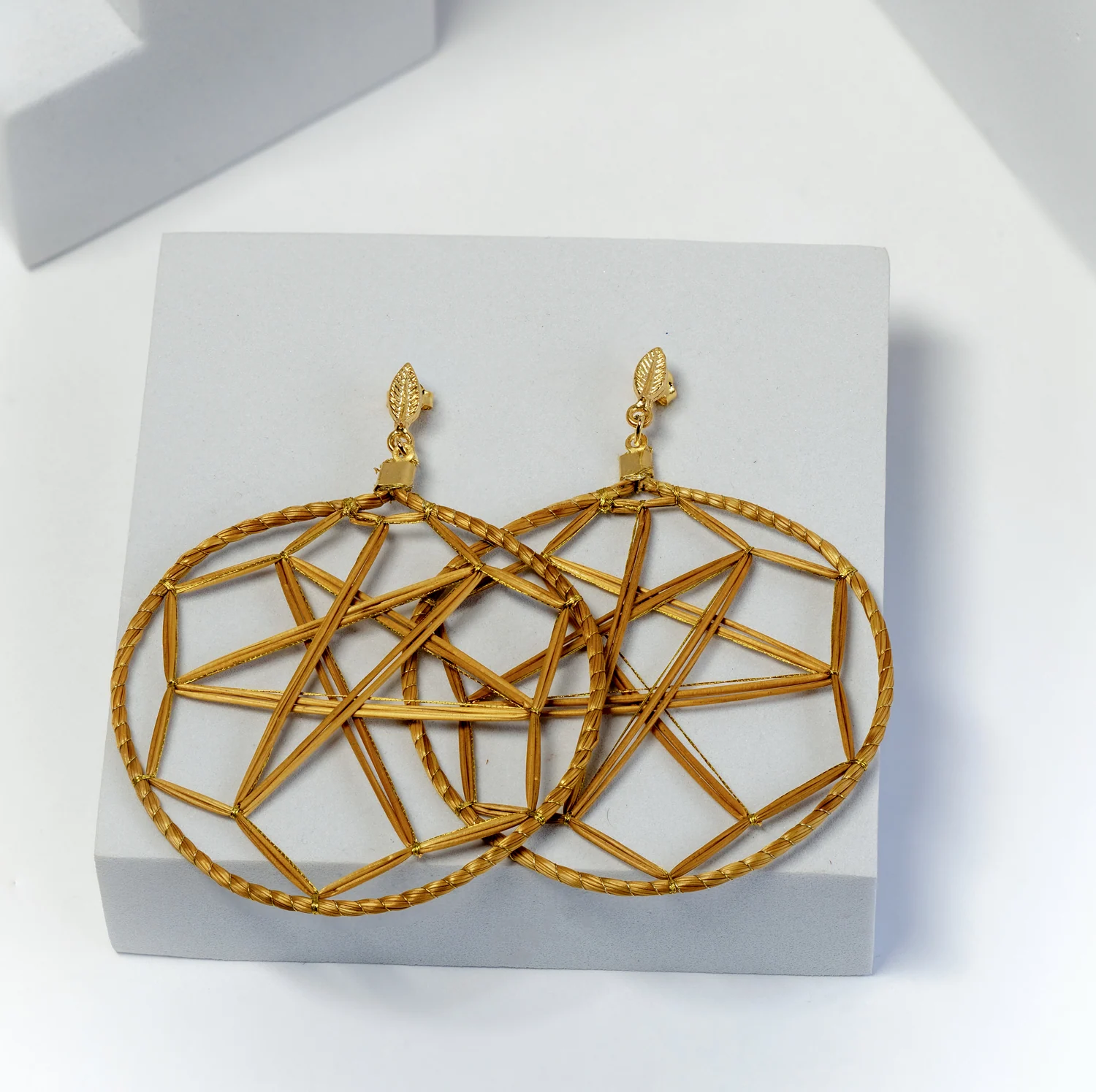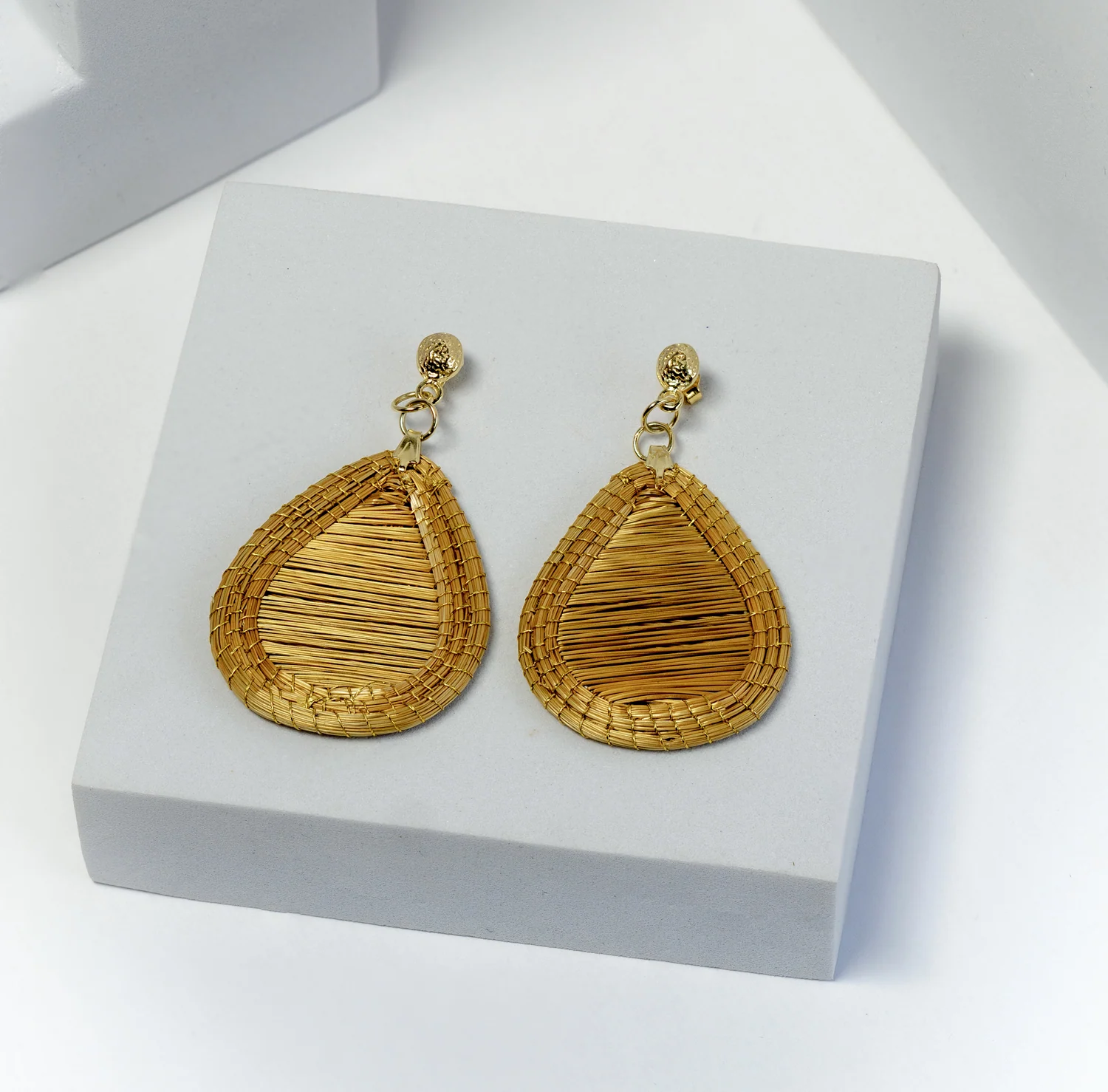
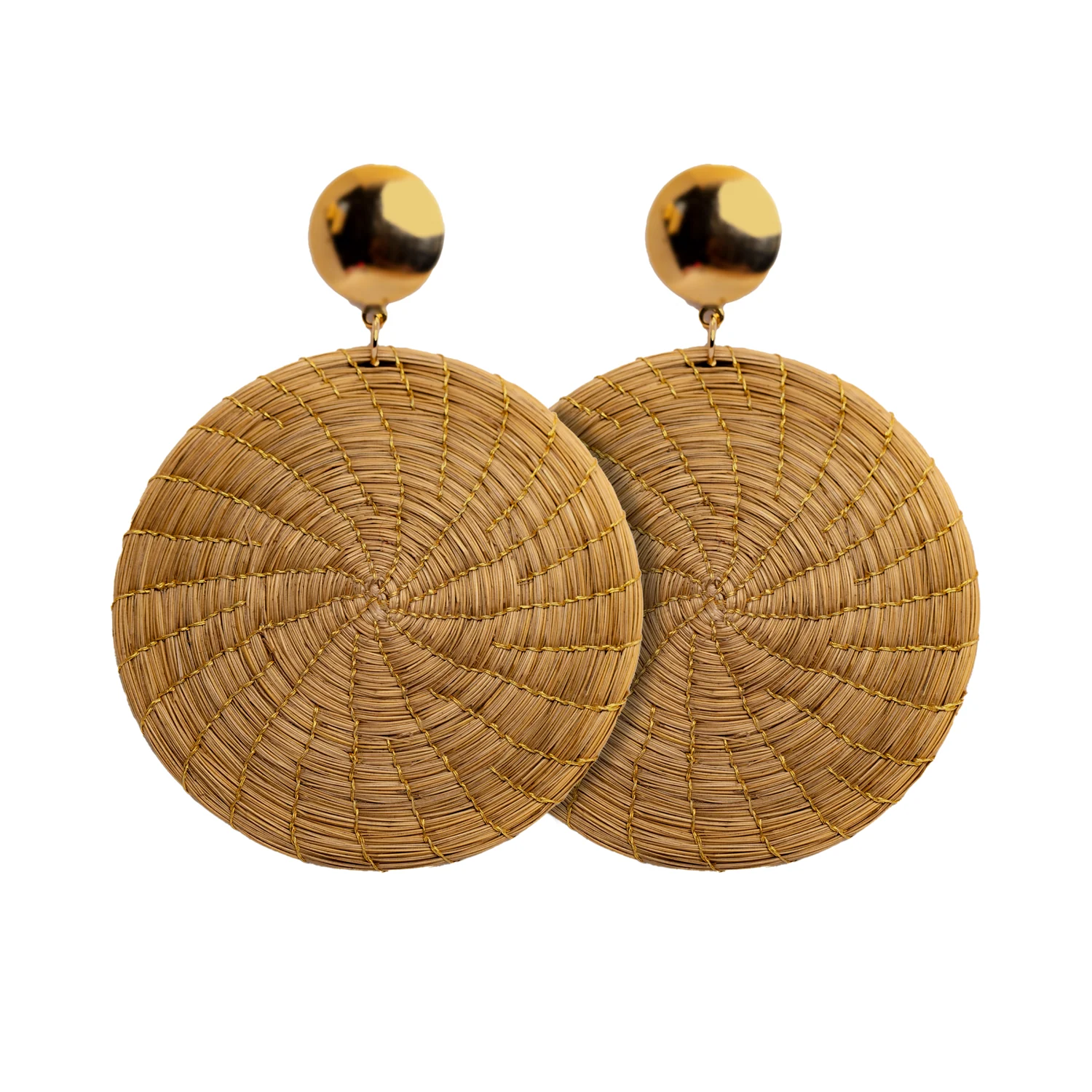
Choosing earrings from a catalogue requires more than deciding which shape looks attractive. A close photograph can make a compact design appear substantial, while a large open form may look heavier than the measured object suggests. The buyer needs consistent dimensions and weight information before deciding how the references relate to one another.
The goal is a selection with understandable choices. Some customers may prefer a compact outline, others a longer drop or a more expressive shape. The buying plan should make those options visible without assuming that appearance alone predicts fit or comfort.
At a glance
- Separate full drop, body dimensions and weight per earring or pair.
- Use measurements to make scale choices visible across the range.
- Avoid turning lightness or size into a universal comfort promise.
In this guide
- Ask for three separate measurements
- Compare scale with complete objects
- A hypothetical selection matrix
- Keep weight descriptive
- Assess pairs and expected variation
- Use the display to preserve the comparison
Ask for three separate measurements
Record the full drop from the top of the fastening to the lowest point, the dimensions of the main body and the width at its widest point where relevant. Confirm how the supplier measures each figure. A body-only length and a full-drop length can both be accurate while producing a misleading comparison if placed in the same column.
For weight, ask whether the number refers to one earring, the pair or the packaged unit. If a pair is asymmetrical by design, a single combined figure may hide the difference between its two parts. Record the actual unit being described rather than assuming a convention.
Compare scale with complete objects
Place samples or accurately scaled representations beside one another. Include the fastening so the full silhouette is visible. A narrow long design and a shorter broad design offer different visual choices even if their overall area seems similar.
Do not compress the selection into simple “small, medium, large” labels before looking at the shapes. Those labels can be useful internally, but the customer benefits from the actual dimensions and a clear view. Define what the labels mean within your own range if you use them.
A hypothetical selection matrix
| Role | Scale question | Information to compare |
|---|---|---|
| Compact option | Does the form read clearly at a smaller size? | Body dimensions and full drop |
| Elongated option | How far does it extend from the fastening? | Full drop and width |
| Broad expressive option | How much lateral space does the silhouette occupy? | Width, shape and weight |
| Alternative construction | Does it create a useful difference beyond appearance? | Materials, fastening and measured weight |
The matrix describes roles, not a required order quantity. A boutique with a tightly defined audience may need only some of them. The point is to avoid buying several visually similar references while leaving a meaningful scale preference unanswered.
Keep weight descriptive
A measured weight is useful information. “Comfortable all day for everyone” is a much broader claim. Do not infer it from a low number or from how the product feels in your own hand. Wearer preferences differ, and the complete design includes more than mass alone.
Use factual phrasing such as the confirmed weight per earring and the fastening type. Where a customer asks a personal suitability question, help them compare the available information without giving an unsupported guarantee. The same restraint applies to claims about sensitive skin or allergy safety.
Assess pairs and expected variation
For handmade pieces, agree what coordinated appearance means within a pair. Small differences may be part of the accepted design, but the buying expectation should be clear. Compare the two earrings together rather than assessing each only against a separate product photograph.
If the stated weight or dimensions are approximate, ask how the expected range is represented. A narrow display compartment, a specific visual balance or a carefully graduated collection may make those differences relevant. Give the supplier the practical reason for the question.
Use the display to preserve the comparison
Show related references at comparable heights and angles when customers are choosing between them. Avoid making a compact piece seem larger through a much closer display position. Give longer shapes enough space to hang as intended, subject to the supplier’s guidance on support and handling.
Keep complete dimensions accessible without turning the display into a technical chart. A clear product card or the shop’s normal information system can hold the details while the arrangement shows the shape.
When selecting from the Toodobem catalogue, use measured scale and weight to edit the range. Clarify missing values through Toodobem contact. A balanced selection gives each silhouette a reason to exist and lets customers choose from accurate information about the pieces in front of them.