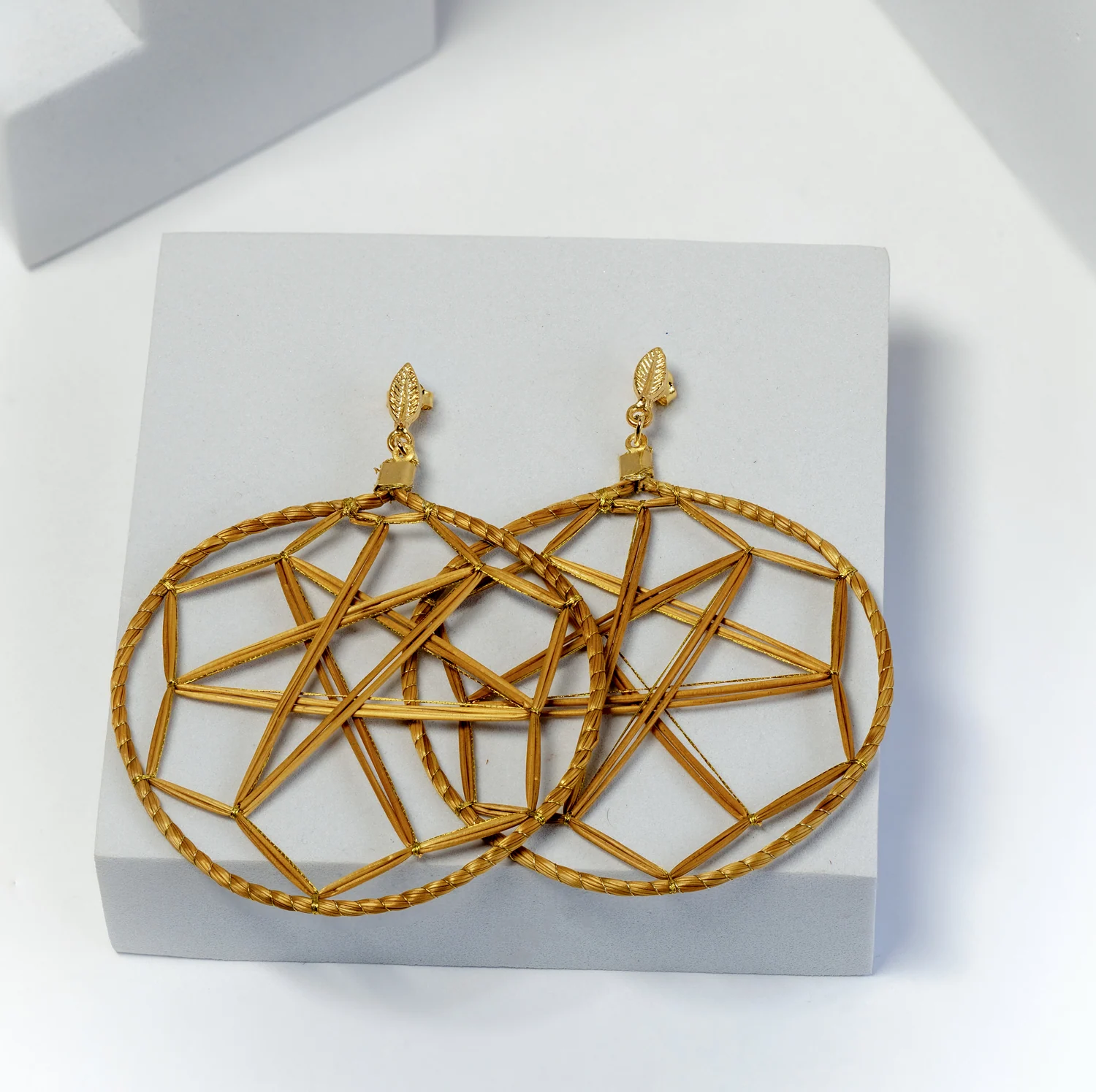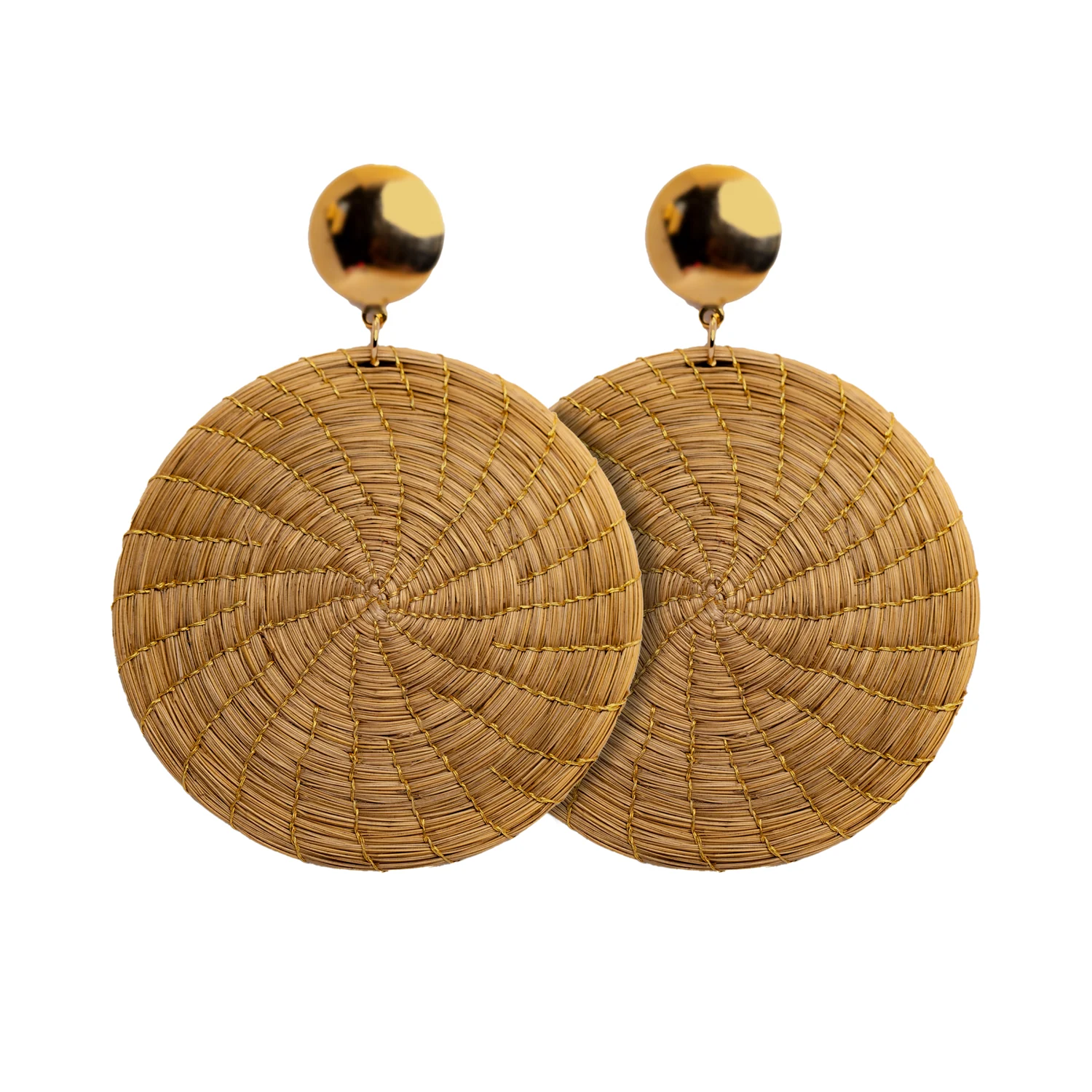
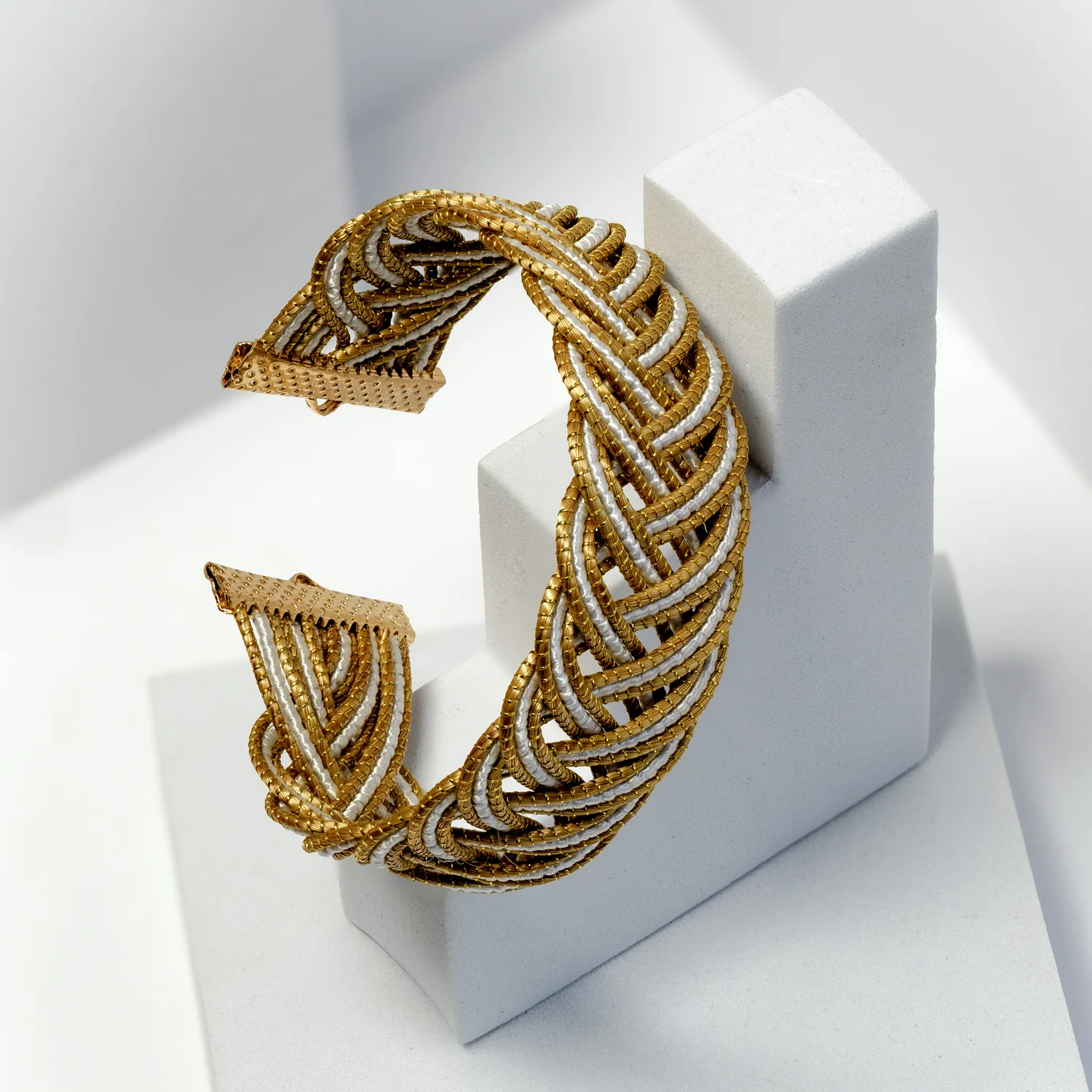
Two accessories may share a pale, softly textured surface while being made from different plant materials. Equally, one object can combine several fibres that perform different jobs. For a boutique buyer, the useful comparison is not “Which natural fibre is best?” It is “Which documented construction is suitable for this product and its intended use?”
At a glance
- A broad fibre label cannot identify a plant species.
- Local material names need a clear explanation in English.
- Compare finished constructions instead of ranking fibres by appearance.
In this guide
- Start with the name, then go further
- Build a comparison around functions
- An evidence grid for a buying meeting
- Read samples as evidence with limits
- Ask a narrower question when an answer is vague
- Choose a material story you can maintain
Start with the name, then go further
Research on golden grass craft identifies a binding called seda de buriti as fibre from a young leaf of Mauritia flexuosa. In that documented material context, the word seda refers to a plant fibre rather than establishing the presence of animal silk.
This example shows why a direct translation can be misleading. Ask the supplier to explain a local term in plain English and connect it to the specific product. Preserve the original term where it helps identify the material, but do not use its poetic associations as evidence of composition, origin or performance.
A useful answer names the plant where known, the part used and its role in the object. “Buriti fibre binding” answers a different question from “buriti body”. If the principal shape is another material, a description that calls the whole item buriti may give the buyer an incomplete picture.
Build a comparison around functions
Consider three hypothetical samples: a tightly wrapped circular form, a loosely plaited panel and a fine binding around a rigid component. Their surfaces may invite comparison, but their construction tasks differ. The buyer should evaluate the circle for its shape, the panel for its intended support and the binding for the way it holds the join.
There is little value in ranking all three by apparent softness. Instead, ask what movement, contact or handling each part is expected to experience. A fibre that works well as a decorative detail has not thereby demonstrated suitability as a load-bearing strap. Let the product’s stated purpose determine the questions.
An evidence grid for a buying meeting
| Field | Question to resolve | Why it changes the choice |
|---|---|---|
| Material identity | What precisely does this name describe? | Avoids grouping different materials together |
| Component | Where is it used in the object? | Keeps the description proportionate |
| Preparation | Is it dyed, coated or otherwise treated? | Clarifies appearance and care questions |
| Construction | How is the material assembled and joined? | Connects the material to function |
| Reference | Does this answer apply to this item code? | Prevents a general statement becoming product evidence |
Read samples as evidence with limits
A sample helps establish dimensions, surface character and how the object is presented. It cannot prove the botanical identity of an unfamiliar fibre by itself. Do not use colour, a quick touch or an online comparison image as a substitute for a supplier’s material information.
Likewise, one sample cannot define every acceptable variation. Ask to see representative differences in shade, strand width or shape if those features affect the buying decision. Record which range is workable in your shop. A set intended to appear closely matched requires a different degree of coordination from individual pieces offered as distinct choices.
Ask a narrower question when an answer is vague
If the reply is simply “natural fibre”, follow up with the unresolved component: “What is the binding around the outer edge?” If the answer concerns the collection generally, ask whether it applies to the selected reference and current production. A short sequence of precise questions often yields a more useful answer than asking for every possible document at once.
Where the supplier does not know a detail, keep it unconfirmed. You can still decide whether the remaining information is sufficient for your intended purchase. What you should not do is complete the story from a description of another maker’s work or from a museum object that happens to look similar.
Choose a material story you can maintain
Browse the available collections with a short comparison sheet beside you. Select pieces whose construction, appearance and documented materials work together. If two items offer the same retail role, prefer the one whose specification you understand well enough to keep accurate through a reorder.
A strong natural fibre assortment does not depend on declaring one plant superior to another. It depends on matching a well-understood object to a suitable use, preserving clear material names and asking for evidence at the level where the customer will eventually make a choice.