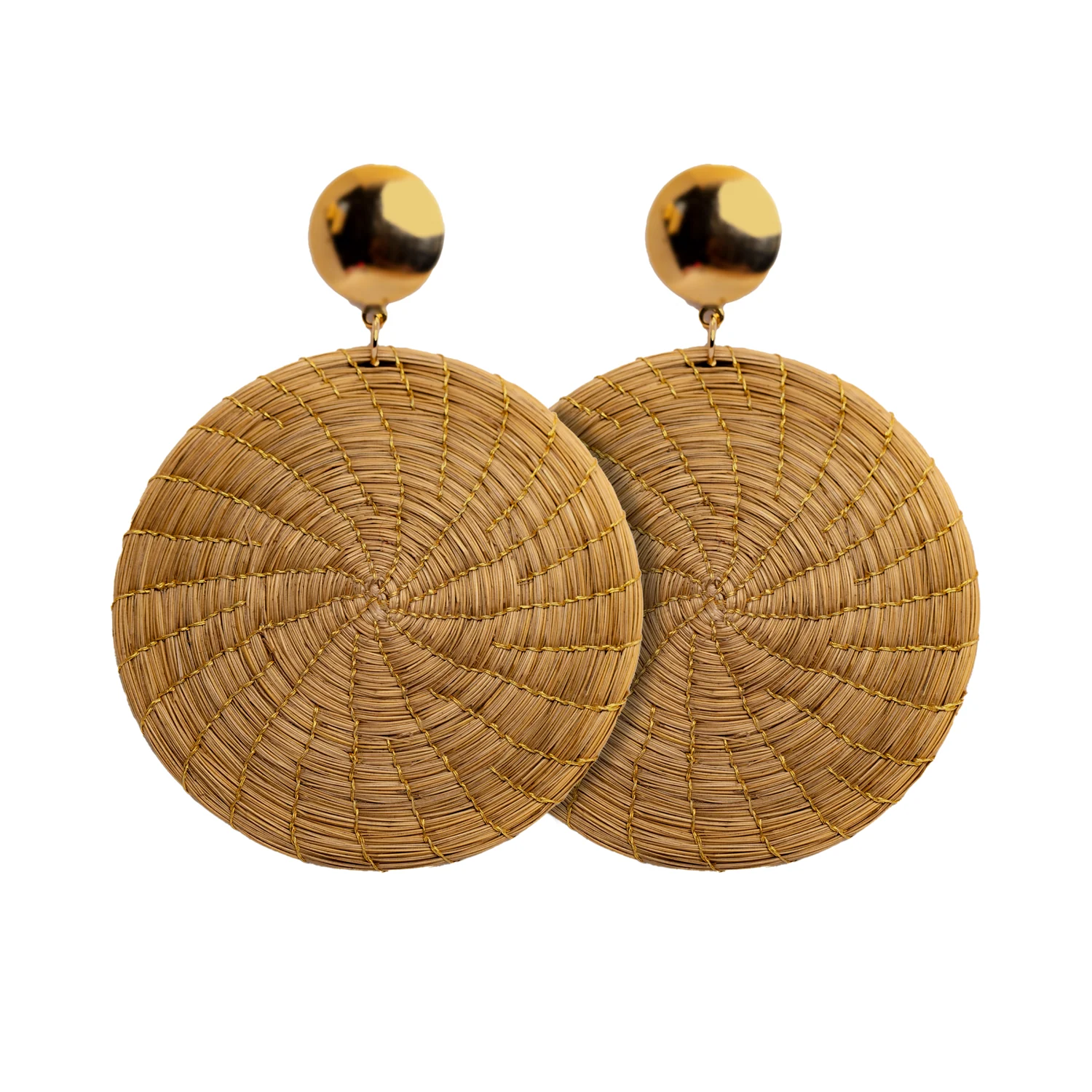

A beautiful handmade object can be easy to admire and difficult to place in a shop. Does it introduce a material your customers have never encountered? Complete a familiar outfit? Offer an accessible gift? A useful first approach to Brazilian craftsmanship starts with those questions. Country of origin gives context, while the buying decision depends on a particular product, a particular customer and a workable commercial arrangement.
For an EU boutique, the opportunity is to add something recognisable within its own point of view. A shop built around restrained clothing might choose sculptural accessories. A homeware shop might prefer repeated shapes and tactile surfaces. Neither needs a complete survey of Brazilian craft. Both need a selection they can explain and present confidently.
At a glance
- Give each product a clear role in your existing shop.
- Separate material evidence from a general story of place.
- Assess a small, coherent selection before expanding.
In this guide
- Begin with a product’s job
- Learn the material before adopting its story
- Read construction at the points that matter
- Make a buying comparison you can actually use
- Build a range, then challenge it
Begin with a product’s job
Before browsing, write one sentence describing the gap in your current offer. Be specific enough to reject unsuitable pieces. “Small gifts for customers who prefer texture to strong colour” provides a decision rule. “Something Brazilian” leaves almost every option open and encourages an assortment held together only by geography.
Then assign proposed products to three roles: an introduction, a dependable centre and a more expressive highlight. These are buying roles, not quality grades. The introductory item must still represent the collection well. The highlight should make the range memorable without consuming the money needed for products with broader appeal.
Learn the material before adopting its story
A botanical study of capim dourado identifies it as Syngonanthus nitens and explains that craft production uses its flowering stalks. That is a useful material fact; it does not establish the origin or harvesting history of any individual product.
Use the same distinction across the range. Ask what the principal material is, which components are added, and what evidence relates to the actual reference you are considering. A familiar colour or visible weave is a starting point for questions, not a reliable identification method. If a supplier changes a cord, clasp or lining, your understanding of the finished object should change with it.
Read construction at the points that matter
Look beyond the most photogenic surface. On an accessory, inspect where the main body meets a fastening. On a decorative object, consider its base, edge and intended orientation. Ask how the piece should be handled and what kind of use it is intended to support. An object suitable for decorative display should not acquire a functional promise simply because a customer can imagine one.
Compare several pieces of the same reference where possible. The aim is to understand the expected range of shape, tone and dimensions. Record which differences preserve the design and which would change fit, stability or use. This gives you a fair basis for evaluating handmade work without assuming every difference is either a defect or a desirable feature.
Make a buying comparison you can actually use
| Question | Useful answer | Decision it supports |
|---|---|---|
| Who would choose it? | A specific customer and occasion | Whether it fills a real gap |
| What is it made from? | Named main material and added components | Whether you can describe it accurately |
| How does it vary? | An agreed range illustrated by examples | Whether repeat pieces remain suitable |
| What does buying involve? | A current quotation with quantities and terms | Whether the commitment fits your budget |
Keep the comparison short enough to use while selecting. A lengthy questionnaire is less helpful if its answers never influence the order. If you cannot explain how a question changes your choice, move it out of the first buying discussion.
Build a range, then challenge it
Imagine a hypothetical selection of six references. Two provide an approachable starting point, three share the central colour and shape language, and one introduces a stronger silhouette. Lay them out beside products already in the shop. Remove the country labels temporarily. If the new pieces still make sense together, the assortment has an aesthetic reason to exist.
Next, restore the documented material and origin information. It should deepen the customer’s understanding rather than compensate for a confusing range. Remove any proposed item that duplicates another without adding a meaningful choice in function, scale or price position.
Use the Toodobem collections to form a shortlist, then resolve the open questions before committing. The strongest first purchase is one you can display clearly, describe accurately and evaluate after selling. That creates a foundation for a larger craft offer without requiring the first order to answer every possibility.